Resources for Greater Freedom and Flourishing
The Meadow
Notice the path.
Understand what makes sense.
Discover what else may be possible in Christ.
Have you ever found yourself wondering:
Why does this keep happening?
It may be a different situation, with a different person, and in a different season of life.
Yet somehow, the reaction feels familiar.
You've been here before, more times than you would like.
We all develop well-worn ways of thinking, feeling, attending, and responding. Many began as useful adaptations. They helped us protect what mattered, preserve connection, navigate uncertainty, or make our way through difficult circumstances.
But familiar does not mean inevitable.
The path is real. But it is not your identity. And it is not the whole meadow.
The resources here are designed to help you notice the pathways you know best, understand why they may have become so familiar, and practice becoming more flexible and free in the ways you respond.
For Christians, that freedom has a larger purpose: flourishing—becoming increasingly free to live and love well in our relationships with God, ourselves, and others.
You do not need to use every resource here, or use them in a particular order.
If something keeps happening and you want to understand why, start with The Meadow Map.
If you already know the old path and need help in a particular moment, one of the short guided practices may be a better place to begin.
Wherever you start, the invitation is the same:
Notice the path. Understand what makes sense. Discover what else may be possible in Christ.
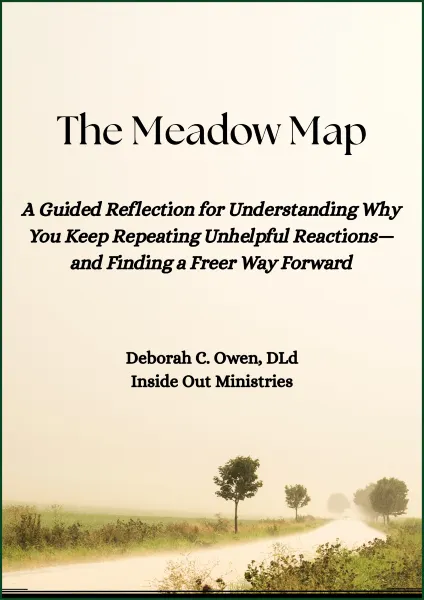
Start Here: The Meadow Map
A guided reflection for exploring one recurring situation, identifying the old pathway, noticing what becomes especially important, and discerning what else may be possible in Christ.
Best for: “Something keeps happening, and I want to understand why.”
Walk the Meadow — Guided Audio Reflection
Experience the pathway differently.
Sometimes we need more than insight. We need enough space to slow down, notice what is happening, and listen for what else may be possible.
In this 12–15 minute guided reflection, I’ll accompany you through one real situation—helping you notice what is happening in your body and emotions, recognize the old pathway that is becoming active, consider what you may be trying to protect or secure, and open yourself to a freer response.
The reflection ends by bringing what you have discovered into the presence of Christ and asking:
What might become possible here that wasn't available to me on the old path?
Use "Walk the Meadow" when: you want to slow down with one particular situation and discern your next faithful response in Christ.
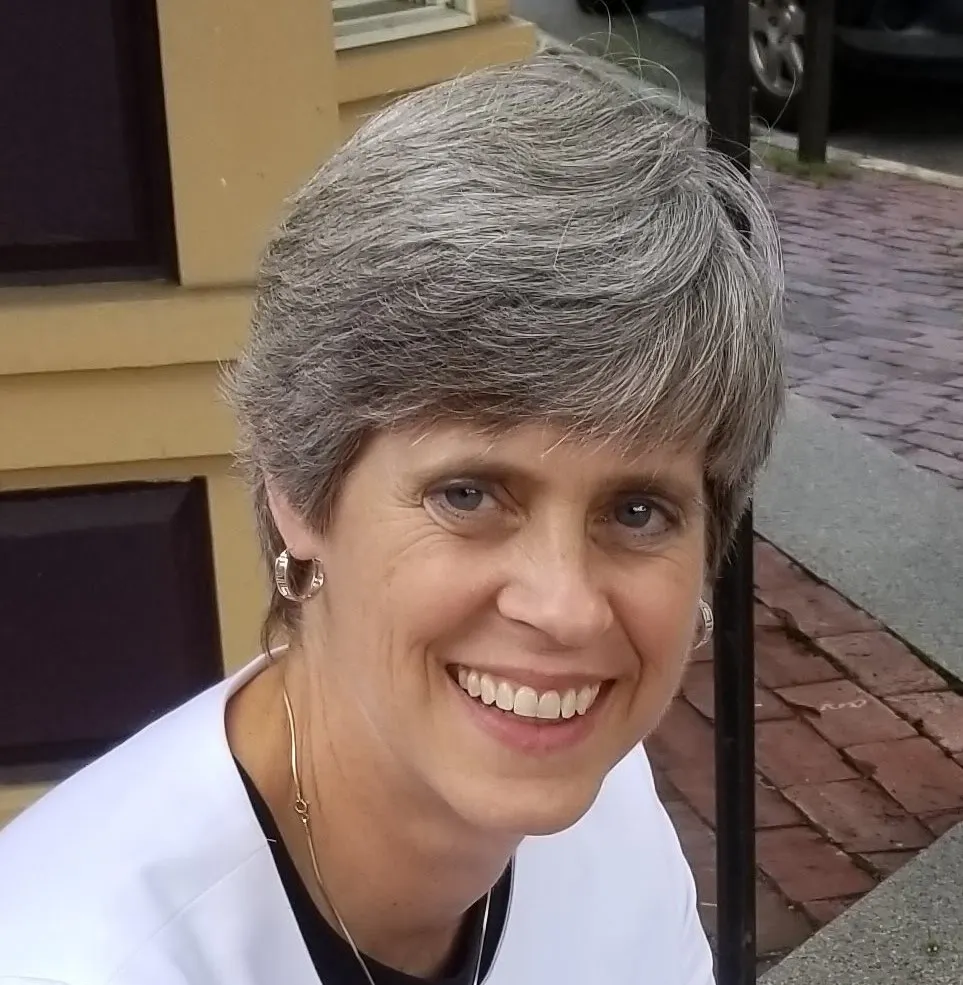
Deborah C. Owen, DLd
When you are tired of striving, carrying too much alone, or feeling divided between wanting to be like Jesus and how you actually show up under pressure...
Let’s talk.
Deborah C. Owen, DLd is the founder of Inside Out Ministries, where she helps people grow in self-knowledge, relational freedom, and spiritual maturity through coaching, spiritual direction, retreats, writing, and teaching. Her work brings Christian spiritual formation into conversation with attachment theory, interpersonal neurobiology, and the the Neuro-Based Enneagram—her integration of Enneagram wisdom with Dan Siegel’s and the PDP Group’s Patterns of Developmental Pathways model within Christian spiritual formation.
Debbie is especially interested in helping people prevent and recover from burnout, and in closing the gap between the way we sincerely desire to live and what our well-worn patterns make available to us in stressful moments. Her work explores how greater flexibility can open the way toward flourishing in our relationships with God, ourselves, and others.
She is the author of From the Inside Out and two series of Advent and Lent Neuro-Based Enneagram guides. She also writes Rooted & Rising on Substack and hosted the podcast, Flourishing Leadership in Tough Times.

Follow me on Substack
Rooted & Rising